
Microchip MTCH102-I/MS Capacitive Touch Sensor: Design and Application Guide
Capacitive touch sensing has revolutionized user interface design across countless electronic products, from consumer appliances to industrial control panels. The Microchip MTCH102-I/MS stands out as a highly integrated, single-channel capacitive touch sensor controller, offering designers a robust and straightforward solution for implementing reliable touch interfaces. This guide explores its core functionality, key design considerations, and practical application scenarios.
Core Functionality and Key Features
The MTCH102-I/MS is designed to detect a touch or proximity event through a single electrode. Its operation is based on measuring the capacitance change introduced by a human finger. The device employs a sophisticated sampling algorithm to differentiate between an actual touch and environmental noise, ensuring high reliability. Key features that make it a popular choice include:
Low Power Consumption: It operates over a wide voltage range (1.8V to 5.5V) and features a low-power sleep mode, making it ideal for battery-powered applications.
High Noise Immunity: Integrated hardware and software filtering mechanisms provide excellent resistance to electromagnetic interference (EMI) and power supply noise.
Simple Configuration: The sensor's sensitivity and other parameters can be easily adjusted using external components, primarily a single capacitor (CSENS). This eliminates the need for complex firmware or programming.
Small Form Factor: Housed in an MSOP-8 package, it is suitable for space-constrained PCB designs.
Critical Design Considerations
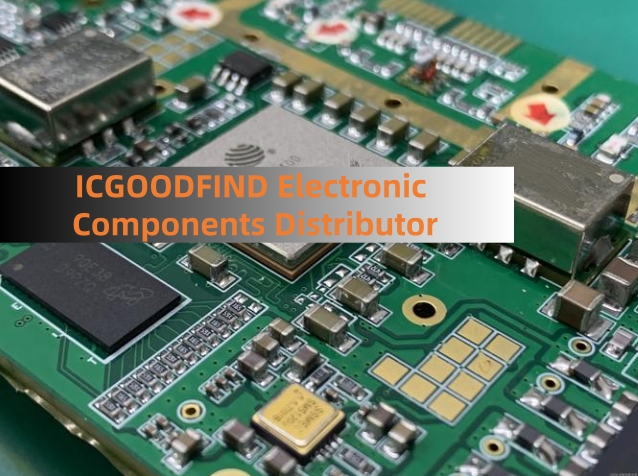
Successful implementation of the MTCH102 hinges on a well-designed printed circuit board (PCB) and proper component selection.
1. Sensor Electrode Design: The electrode can be a simple copper pad on the PCB, often in a diamond or circular shape. Its size directly affects sensitivity; a larger pad is more sensitive. A ground plane should be placed behind the sensor pad, separated by PCB substrate, to form a stable baseline capacitance. A keep-out area around the sensor pad, free from other copper and ground fills, is crucial to prevent parasitic capacitance and false triggering.
2. Sensitivity Tuning: The CSENS capacitor is the primary component for adjusting sensitivity. A smaller value increases sensitivity (for smaller pads or thicker overlays), while a larger value decreases it. Finding the right value is a balance between achieving reliable touch detection and avoiding activation due to environmental factors.
3. Power Supply Decoupling: A 0.1 µF ceramic decoupling capacitor must be placed as close as possible to the VDD and VSS pins of the IC. This is non-negotiable for stable operation, as it filters high-frequency noise on the power rail.
4. Overlay Material: The MTCH102 can sense touch through various dielectric materials like glass, plastic, and even wood. The thickness and dielectric constant (k) of the material impact sensitivity. Thicker overlays require higher sensor sensitivity (a smaller CSENS value).
Typical Application Circuits
The MTCH102-I/MS offers two primary output modes configurable via its MODE pin:
Toggle Mode (MODE = Low): Each touch event toggles the output state between high and low, perfect for controlling an LED or power switch.
Level Mode (MODE = High): The output remains high for the duration of the touch and goes low when released, ideal for momentary switches or buttons.
A basic application circuit involves connecting the sensor pad to the SNS pin, configuring CSENS, adding the decoupling capacitor, and pulling the MODE pin to VDD or GND. The output pin can then directly drive a microcontroller's input or a transistor for controlling higher-load devices.
Conclusion and Application Ideas
The Microchip MTCH102-I/MS provides a simple, cost-effective, and highly effective method for adding a single touch interface to a design. Its strength lies in its hardware configurability, which removes software complexity and accelerates development time.
ICGOODFIND: The MTCH102-I/MS is an exemplary solution for designers seeking to implement a no-fuss, reliable capacitive touch sensor. Its robustness against noise and low power profile make it exceptionally well-suited for applications such as smart home controls, touch-activated lights, industrial equipment panels, and interactive consumer electronics, where a single, dependable touch point is required.
Keywords:
Capacitive Touch Sensing
PCB Design
Noise Immunity
Low Power Consumption
Sensor Electrode

